
Oh Deer What Could the Matter Be?
Updated: Feb 9
When most people think about apple orchards, they picture spring blossoms or fall harvest. Winter feels quiet and still. But as a grower, winter is one of the most important times of year to protect our trees, especially from deer. Our 7th generation family farm has tried a number of different methods to deter deer over the years. One of our past strategies may work best for the backyard apple grower.
If snow covers the ground and natural food sources disappear, apple trees become an easy target. Deer are not being destructive on purpose; they are just trying to survive. Unfortunately, what helps them can seriously hurt young and productive apple trees.

During winter, deer feed on buds, young branches, and sometimes even the bark. Those buds are not just leaves for the spring; they are future growth and future apples. When deer browse those buds off, the damage does not show up right away. It shows up months later when trees fail to grow evenly or produce the way they should.

One winter of heavy browsing can set a tree back years. In some cases, it can permanently change the shape of the tree. Winter deer damage affects how it grows, how it is pruned, how it is sprayed, and how much fruit it can produce in the future. All of that matters when you care about growing consistent, high quality apples. We do our best to make sure there are plenty of apples for our guests to pick every fall.

Snow actually makes the problem worse. As snow builds up, deer can reach higher into the tree canopy. Areas that were safe in the fall are suddenly within reach. We often see clean lines where buds have been eaten just above the snow level. That damage is very targeted and very real.
Most deer activity happens at night and along the edges of orchards near woods or brush. That is why you may never see it happening, but the signs are clear once you know what to look for. Tracks in the snow. Browsed shoots. Missing buds.

There are tools home and commercial growers can use to reduce deer pressure. These include repellents, tree guards, scare devices, and increased human or dog activity. Each of these can help reduce damage and we use them when appropriate. However, none of them are a guarantee on their own, especially during harsh winters when food is scarce.
The only way to be sure deer do not damage apple trees is to keep them away from the orchard entirely. That is why exclusion is such an important part of orchard management. Protecting trees in winter protects the work that has already been done and ensures those trees are ready to grow, flower, and fruit when spring arrives.

Over the course of the last few years we have installed 8 ft deer fencing around the pick your own orchard in Modena and both of our home farms in Clintondale. This investment has definitely paid off in the protection it has given our trees, but it requires constant upkeep.
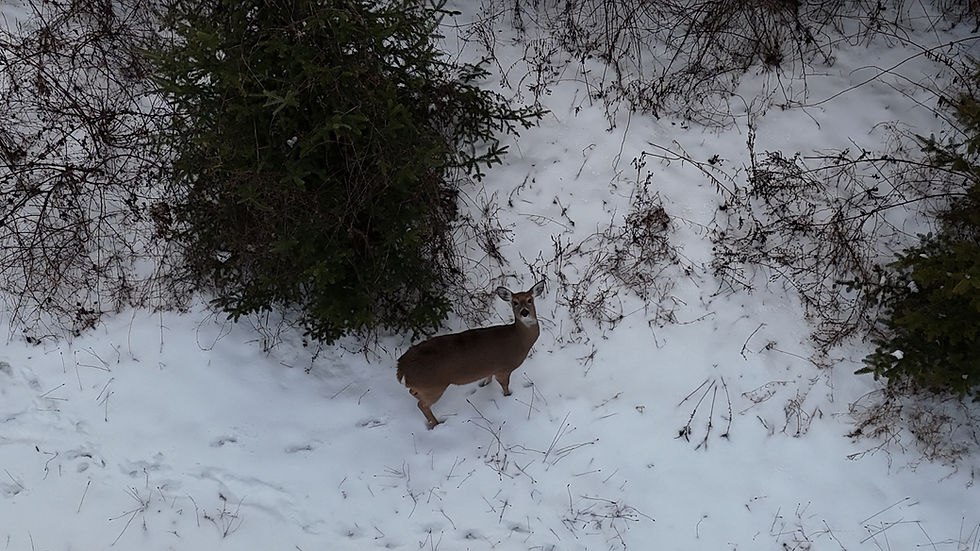
You may be wondering how we know the fence had been compromised. There are a few ways to detect the deer have infiltrated the orchard. The easiest way is seeing tracks in fresh snow and following them to where the deer are getting in. Our family has used snow shoes for years to trek around the orchard in winter to care for and check on the trees. Just recently we invested in a drone to be able to scout more of the orchard faster.

Our latest fence repair project was restoring a section that came down across the stream on our home farm. Which, as you can imagine, in February with over a foot of snow on the ground, this was quite the undertaking. Fortunately for us the stream was frozen enough to walk on.

Ending on some fence positives for 2026. Here are 2 examples of a working fence at our pick your own farm! These deer caught on our night camera seem to be saying, “who closed the fence?”
Many people have a few apple trees in their backyard that they would like to protect from deer in the winter without building an 8 ft fence around their entire property. Yes the fence has to be 8 ft tall to keep the deer from jumping over it. For just a few apple trees, you could build a 6 ft or higher temporary cage about 2-3 feet from the trunk of the tree to prevent deer from browsing. Deer can push through the lightweight plastic fencing, but it may be enough to deter them.
Over 20 years ago, before the fence, you would see soap or maybe even dryer sheets hanging from our young trees in mesh bags. They would deter deer from eating branches from about 2 feet from the bar. We would focus this strategy on the youngest trees where deer could do the most damage, especially the central leader on the top. Then NYS regulators decided that soap is not an approved IPM (integrated pest management) application, so we were no longer able to continue to using soap. This blog by 2 Men and a Little Farm does not confirm this method works, but we used it on our farm for years.

Our farm does not spray anything on our trees to keep those pesky deer away, but many backyard growers do. This Deer Out product is all natural and American made. It might be worth a try for more than just your apple trees. The focus of this product is spring, but it is designed for year round use. Let us know what you think.

When you visit Hurds Family Farm and enjoy our apples, you are tasting years of care, not just one growing season. Winter protection is part of that care. It helps us deliver healthy trees, strong harvests, and the quality you expect from us year after year.
If you ever see deer tracks in the snow while walking the farm, you are seeing one of the quiet challenges of growing apples. And you are also seeing why we take winter orchard protection seriously.
Learn more about growing apple trees at one of our farm school workshops.


